Search has fundamentally changed. Not gradually. Structurally.
With the rise of AI-driven search experiences like Google’s Search Generative Experience, conversational AI systems like OpenAI, and answer engines such as Perplexity AI, users are no longer just clicking blue links. They are asking layered questions, expecting synthesized answers, and trusting machine-generated summaries.
In 2026, visibility is no longer about ranking #1.
It is about being selected.
This shift has transformed SEO from keyword positioning into authority engineering. If you want your website to win in AI search environments, you must understand how modern search systems evaluate trust, entities, relationships, and intent at scale.
Let’s break down what visibility really means now and how to earn it.
From Search Engine Optimization to Search Visibility Engineering
Traditional SEO focused on:
- Keywords
- Backlinks
- On-page optimization
- Technical hygiene
Those elements still matter. But they are no longer sufficient.
Modern search systems rely heavily on:
- Entity recognition
- Topical authority
- Content depth and coherence
- User intent modeling
- Structured data
- EEAT signals (Experience, Expertise, Authoritativeness, Trustworthiness)
Google’s ranking systems increasingly prioritize content that demonstrates expertise and clear topical relationships rather than pages that simply match keyword patterns.
In other words, Google is no longer ranking pages.
It is ranking entities within knowledge contexts.
The Rise of AI Search and What It Means for Websites
AI search does three important things differently:
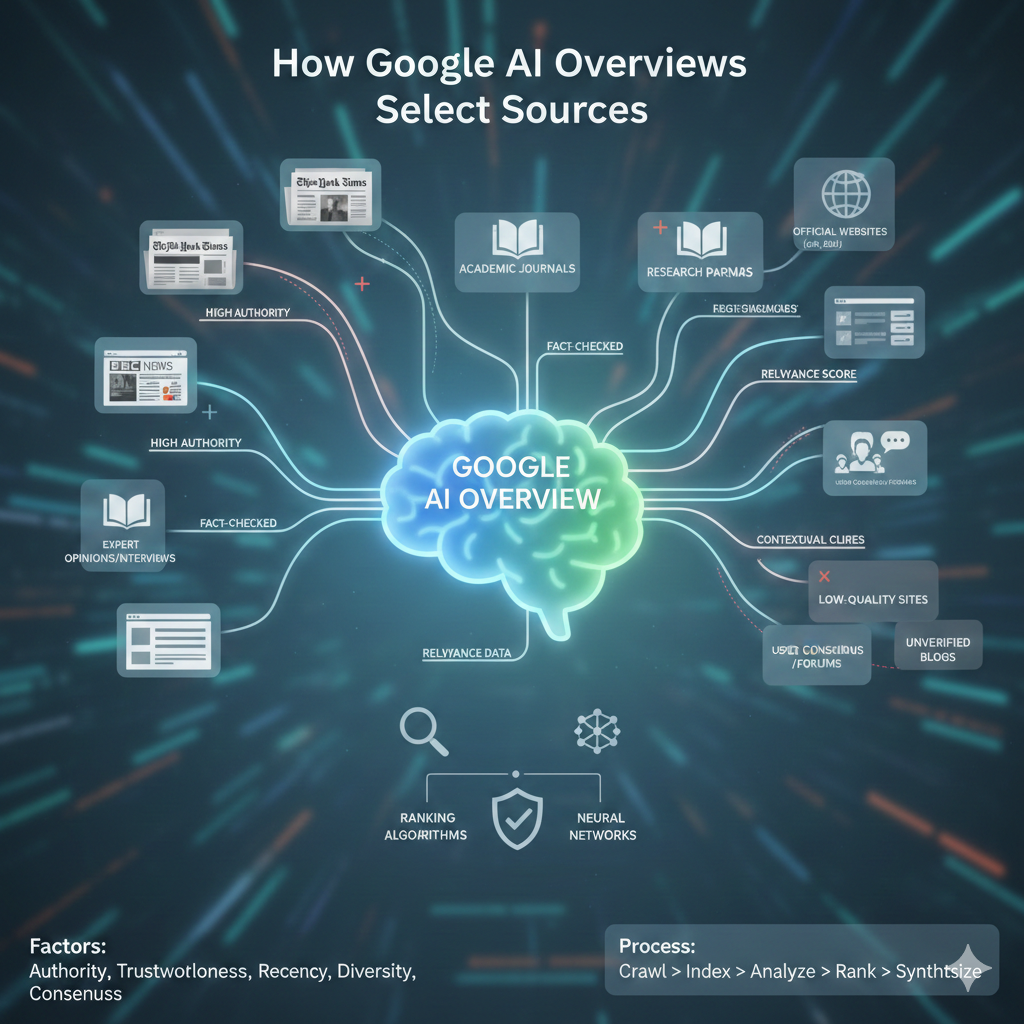
- It synthesizes multiple sources into one answer.
- It prioritizes clarity and trust over volume.
- It surfaces sources based on authority signals, not just keyword match.
When a user asks, “How does SEO work in 2026?”, the AI doesn’t scan for exact keyword repetition. It looks for:
- Comprehensive explanations
- Structured knowledge
- Contextual depth
- Trusted domains
- Clear author expertise
This is why thin content, surface-level blogs, and keyword-stuffed pages are disappearing from meaningful visibility.
AI systems are essentially asking: “Is this site a credible source on this topic?”
If the answer is unclear, you are invisible.
Understanding the Three Layers of Modern SEO
To win in 2026, you must operate on three interconnected layers:
1. Technical Integrity
Search engines still require:
- Crawlability
- Proper indexing
- Clean architecture
- Fast performance
- Mobile optimization
- Structured data
Without technical stability, even the best content will struggle to surface in AI-generated summaries.
2. Topical Authority
Publishing random posts is no longer viable.
Modern SEO requires:
- Content clusters
- Pillar and supporting pages
- Internal linking mapped by semantic relationships
- Entity reinforcement
If you write about SEO, you must cover:
- Technical SEO
- Content strategy
- AI search optimization
- EEAT
- Link building evolution
- Search intent mapping
- Structured data
- Algorithm updates
Authority is not declared. It is demonstrated through coverage depth.
3. Entity-Based Positioning
Google increasingly relies on entity understanding via its Knowledge Graph.
An entity is not a keyword. It is a uniquely identifiable concept.
For example:
- Google is an organization entity.
- Bing is another search entity.
- OpenAI represents an AI organization entity.
When your content consistently references relevant entities within a structured topical framework, you strengthen semantic clarity.
This improves:
- AI citation likelihood
- Knowledge graph association
- Contextual trust
What Is Actually Ranking in 2026?
Based on observable trends, the content types winning in AI search environments share these characteristics:
1. Deep, Structured Explanations
Short, shallow content rarely appears in AI answers. AI systems favor comprehensive pages that:
- Define the topic
- Explain mechanisms
- Offer frameworks
- Provide examples
- Address related subtopics
This is why 1,800–2,500 word structured pillar content outperforms thin 800-word blogs.
2. Clear Topical Focus
Pages that attempt to cover unrelated topics lose semantic clarity. A page about “SEO in 2026” should not suddenly pivot to social media hacks. AI systems value coherence.
3. Real Expertise Signals
Experience is becoming more important than ever.
That includes:
- Author bios
- Professional background
- Case-based insights
- Data interpretation
- Strategic analysis
Google’s emphasis on EEAT is not theoretical. It is operational.
The Shift from Traffic to Visibility
Here is a hard truth: organic traffic patterns are changing.
AI summaries reduce clicks for informational queries. But that does not mean SEO is dying. It means visibility is expanding beyond traffic.
Modern visibility includes:
- Being cited in AI summaries
- Appearing in featured snippets
- Showing in “People Also Ask”
- Brand mentions in AI-generated responses
- Entity recognition in knowledge panels
The objective is no longer just traffic volume. It is authority positioning. When AI systems repeatedly surface your domain as a trusted source, you build brand equity even if clicks fluctuate.
AEO and GEO: The New Extensions of SEO
Two emerging frameworks are shaping strategy:
AEO (Answer Engine Optimization)
Optimizing content to be directly usable in AI answers.
This requires:
- Clear definitions
- Structured headings
- Direct responses to common questions
- Semantic richness
- Schema markup
GEO (Generative Engine Optimization)
Positioning content to be selected by generative AI systems.
This goes beyond formatting. It requires:
- Demonstrable authority
- Multi-page topical coverage
- Strong internal linking
- High contextual trust
GEO is not a replacement for SEO. It is an evolution.
How to Build AI-Ready Authority in 2026
If you are serious about visibility, here is the consulting-level approach:
Step 1: Build a Strategic Content Architecture
Create:
- 1 core pillar page
- 8–12 cluster pages
- Intent-based internal linking
- Entity reinforcement across pages
Each supporting article should strengthen the pillar semantically.
Step 2: Demonstrate Experience
Move beyond generic advice.
Include:
- Observations
- Strategic reasoning
- Pattern recognition
- Comparative analysis
AI systems increasingly prioritize content that shows applied understanding.
Step 3: Optimize for Clarity, Not Keywords
Instead of obsessing over keyword density:
- Use natural language
- Cover related terms
- Structure content logically
- Answer real user intent
Modern algorithms understand context. Over-optimization reduces trust signals.
Step 4: Strengthen Trust Signals
Include:
- Clear author attribution
- Professional branding
- Transparent contact information
- Secure site infrastructure
- Consistent publishing
Trust is cumulative.
Why Most Websites Will Lose Visibility
Many sites are still operating with a 2018 SEO mindset.
They:
- Publish 800-word generic blogs
- Chase keywords without structure
- Ignore entity relationships
- Avoid long-form authority content
- Lack strategic internal linking
In AI search environments, these sites become invisible because they fail to demonstrate depth.
The future belongs to structured knowledge hubs.
The Strategic Mindset Required in 2026
SEO is no longer a checklist task.
It is a visibility strategy.
Winning websites think like publishers and consultants, not bloggers. They design information ecosystems. They treat content as assets, not posts.
They ask:
- What authority do we want to be known for?
- What entity relationships define our expertise?
- How does our content architecture reinforce that authority?
- Are we teaching, or just publishing?
This is the difference between traffic-driven SEO and authority-driven SEO.
Final Thoughts: SEO Is Not Dying. It Is Maturing.
The rise of AI search does not eliminate SEO. It refines it.
Websites that:
- Demonstrate expertise
- Build structured topical authority
- Optimize for clarity and context
- Strengthen trust signals
- Align with AI consumption patterns
will not just rank. They will be referenced. And in 2026, being referenced is more powerful than simply being clicked. If you want long-term visibility, stop thinking about rankings. Start engineering authority.