Property Type Selection
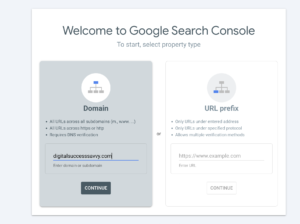
A Domain Property was selected during setup.
Reason:
- Tracks all versions of the website (http/https, www/non-www)
- Provides complete domain-level visibility
- Ideal for long-term SEO monitoring
Verification Method
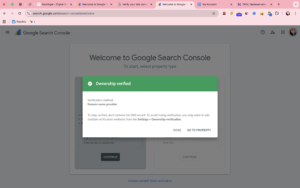
DNS verification was used to confirm ownership.
Why DNS verification was chosen:
- Most secure and stable verification method
- No risk of verification loss due to theme or plugin changes
- Recommended for professional SEO projects
Once the DNS record was added and verified, the property became fully active in GSC.
Initial Google Search Console Optimization
XML Sitemap Submission
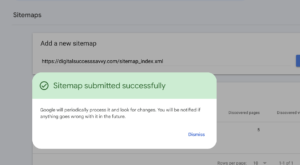
After verification, the XML sitemap was generated using WordPress and submitted directly in Google Search Console.
Benefits of sitemap submission:
- Faster page discovery by Google
- Clear crawling signals for important URLs
- Better tracking of indexed vs non-indexed pages
Index Coverage Review
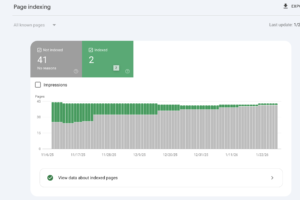
The Index Pages report was reviewed to establish a baseline.
Key checks included:
- Indexed pages count
- Discovered but not indexed URLs
- Excluded pages and reasons
Since the website was new, indexing activity was limited initially. Priority was given to ensuring that core pages such as the homepage, about page, blog page, and contact page were indexed correctly.
URL Inspection and Indexing
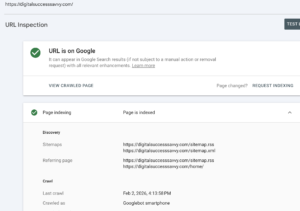
The URL Inspection tool was used to:
- Validate live URLs
- Check mobile usability and canonical tags
- Request indexing for priority pages
This step ensured that Google could properly render and understand the website’s most important pages.
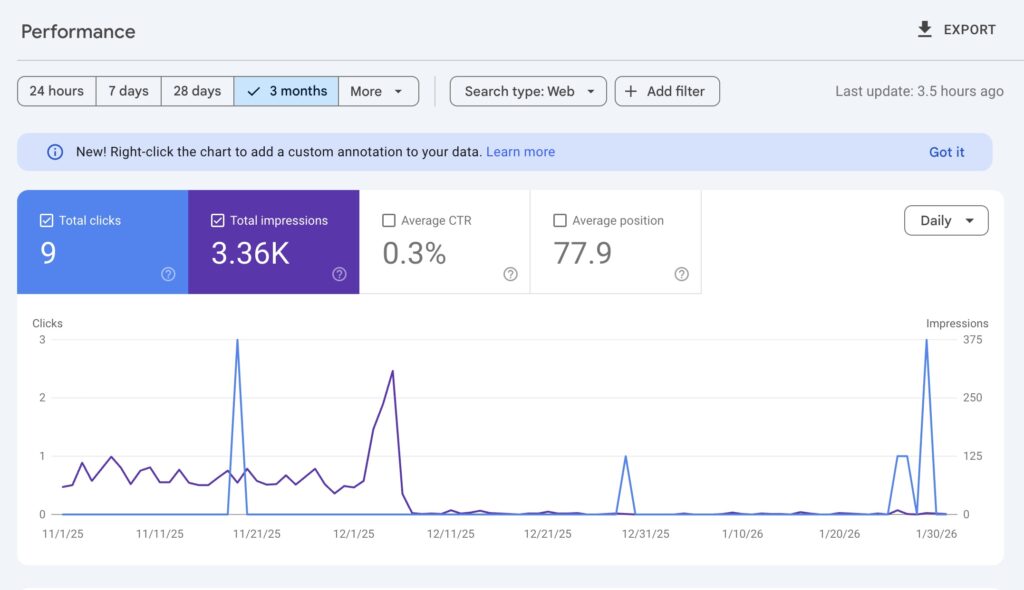
Performance Tracking Setup
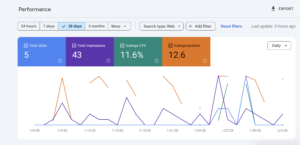
The Performance report was configured with the following filters:
- Search type: Web
- Target location: India
- Date range: Last 28 days (baseline period)
All key metrics were enabled:
- Total clicks
- Total impressions
- Average CTR
- Average position
This created a clean baseline to measure future SEO growth.
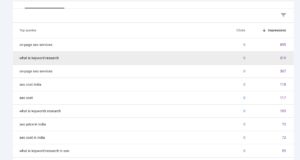
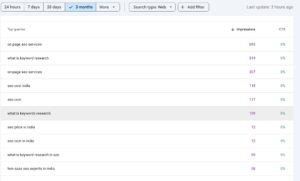
Early Query Discovery
Even with low traffic, GSC began showing early keyword impressions.
These queries were analyzed to:
1. Identify emerging search intent
2. Map queries to existing pages
3. Plan future content topics
CTR & Page Optimization
Pages with impressions but low CTR were identified using GSC data.
Optimization actions included:
- Improving page titles
- Refining meta descriptions
- Better alignment with search intent
This demonstrates how GSC data can directly inform on-page SEO improvements.
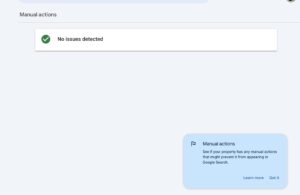
Security & Manual Actions
Manual Actions and Security Issues reports were reviewed to confirm:
- No manual penalties
- No security threats
This validated that the website complied with Google’s quality and safety guidelines.